
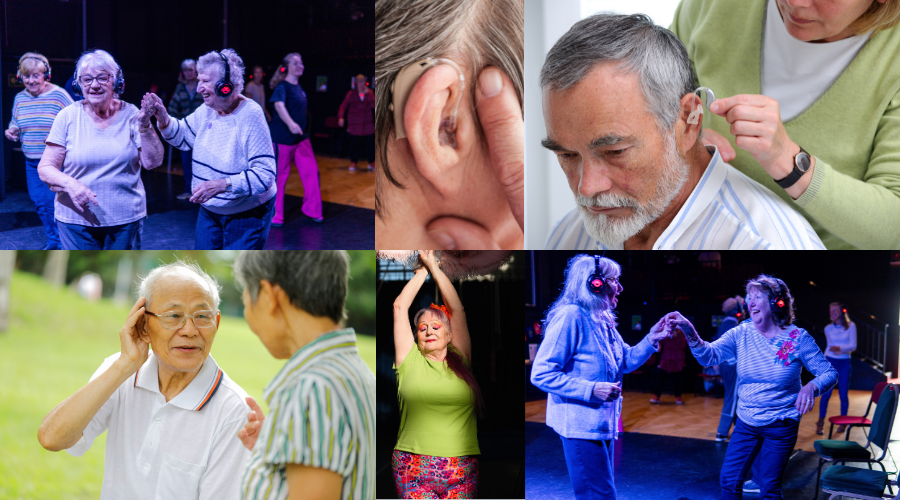
Hearing Loss
Learn how to recognize hearing loss, protect your hearing, get tested, and find the right support to keep communicating and staying connected.
Download this page as a PDF to save, print, or share.
Download printable PDFOriginally published:
March 2024 by the Pacific Regional Centre for Healthy Aging (PRCHA)
Disclaimer
This article was originally developed for the Pacific Regional Centre for Healthy Aging. Health information and recommendations can change as new research becomes available. Some statistics, recommendations, and external resources may have been updated since this article was first published.
This information is for general education purposes only and does not replace advice from a healthcare professional.
What you need to know
Hearing affects more than your ears
Hearing loss can affect relationships, social connection, falls, mood, and thinking and brain health.
Getting help can make everyday life easier
Support for hearing loss can make it easier to communicate with family, friends, co-workers, and health providers and to take part in activities you enjoy.
Support is not one-size-fits-all
Hearing support can include hearing aids, other technology, communication strategies, and guidance from a hearing professional.
When to get your hearing tested
The World Health Organization recommends regular hearing screening for adults beginning at age 50.
Ages 50–64: screening at five-year intervals.
Age 65 and older: screening every one to three years.
Screening does not always mean starting with a full hearing test. One important question is whether hearing difficulties are affecting your relationships, activities, or everyday life.
Treating Hearing Loss
Many people think treating hearing loss means one thing: getting hearing aids and wearing them. Hearing aids can be part of treatment, but they aren't the whole story.
Everyone experiences hearing loss differently. Understanding your hearing loss and getting support for your individual situation is important. This personalized approach is called hearing rehabilitation, or audiologic rehabilitation.
Audiologists are hearing rehabilitation specialists.
How an audiologist can help
Understand your goals
Your support needs depend on where hearing loss is affecting your life. An audiologist can work with you to identify those situations and find approaches that fit your goals.
Find hearing aids that are right for you
There are many types of hearing aids. They need to be selected and adjusted for the individual; not every hearing aid works for every person.
Help you use and care for hearing aids
An audiologist can teach you how to use different settings, care for your hearing aids, and adjust to the new sounds you may experience when you begin wearing them.
Connect you with other helpful technology
Hearing aids are not the only technology available. Other options can make speech and important sounds easier to hear or notice.
- Assistive listening devices
- Remote microphones
- Closed captioning
- Speech-to-text technology
- Alerting devices
Teach strategies that make communication easier
This can include asking people to face you, asking people to speak more slowly without shouting, reducing background noise, or changing your environment to make listening easier.
Help family and friends support you
An audiologist can help people close to you understand how you hear and teach them practical ways to make conversations easier.
Seeing a health professional
If you have hearing loss, you may work with one or more of these health professionals.
Audiologist
A university-trained professional who evaluates and treats hearing loss and other hearing-related conditions such as tinnitus. An audiologist can test your hearing, provide hearing aids, and offer hearing rehabilitation and other treatments.
Hearing instrument practitioner
A college-trained professional who can test your hearing and provide hearing aids.
Ear, nose and throat doctor
An ENT doctor specializes in conditions affecting the ear, nose and throat. They can treat hearing problems that require medication or surgery. Your health practitioner can tell you if you need to see one.
Protecting your hearing
Whether you currently hear well or use hearing support, there are things you can do to protect your hearing.
Do
- Wear ear protection in noisy situations at work and during recreation.
- Limit the amount of time you spend in noisy environments and take breaks.
- Keep the volume down when using headphones or earbuds.
- Stay physically active, eat well, avoid smoking, and stay socially active.
- Keep using your hearing by listening to music, radio or podcasts, or learning a language.
Don't
- Put cotton swabs, toothpicks, sticks or other objects in your ears.
- Ignore pus or fluid coming from an ear.
- Treat ear conditions with hot oil, herbal products or home remedies.
- Swim or wash in dirty water.
- Listen to very loud music or other loud noise for long periods.
Hearing loss by numbers
Hearing loss is common around the world, particularly as people get older.
of people over age 60 globally experience some degree of hearing loss.
people worldwide experience some degree of hearing loss.
people are estimated to experience some degree of hearing loss by 2050.
Supporting someone with hearing loss
Speak clearly, but don't shout
Shouting can make lip-reading more difficult.
Make sure they can see you
Make eye contact and position yourself where your face is well lit. Avoid trying to have a conversation from another room.
Reduce background noise
Turn off the TV, radio or music when possible. Avoid talking while water is running. If you're somewhere noisy, suggest moving to a quieter place.
Be patient
Be patient if you need to repeat or rephrase something.
Use helpful technology
Learn about technology that can help with communication and participate willingly in using it.
Keep people included
Remember to include the person in group conversations.
Resources you can access
The resources below offer practical information and support for hearing loss, hearing testing, communication, and finding hearing professionals in British Columbia.
Canadian Hard of Hearing Association, BC Chapter
Canadian Hard of Hearing Association, BC Chapter
This organization provides information and support for people with hearing loss, including:
Education and information about hearing loss
Support for accessibility
Webinars on assistive hearing technology, accessibility, employment, and other topics
Resources to help people with hearing loss navigate health-care situations
Phone: 1-866-888-2442 or 604-423-3247
Email: info@chha-bc.org
NALscribe
NALscribe is a free speech-to-text tool from National Acoustic Laboratories. It listens to speech and converts it into written text on a phone, tablet, or computer.
hearWHO
hearWHO is a free hearing-check app created by the World Health Organization. It provides basic information about your hearing, displays your results, and lets you track your hearing over time. Results can also be shared with a health provider.
HealthLink BC — Hearing Loss
Read more from HealthLink BC about the causes, types, and treatment of hearing loss.
HealthLink BC — Hearing Loss in Adults
Find information specifically about hearing loss in adults, including signs of hearing loss and options for getting help.
Find an Audiologist or Hearing Instrument Practitioner
College of Speech and Hearing Health Professionals of BC
Find audiologists and hearing instrument practitioners in your area.
Phone: 604-742-6380
Email: enquiries@cshbc.ca
Need more help?
🟦 HealthLink BC
📞 Call 811 (24/7)
Health information and advice from registered nurses, dietitians, pharmacists, exercise professionals, and health service navigators.
🟩 BC 211
📞 Call 811 (24/7)
Community programs, financial assistance, housing, transportation, caregiving, resources, and more.
Available in over 240 languages