
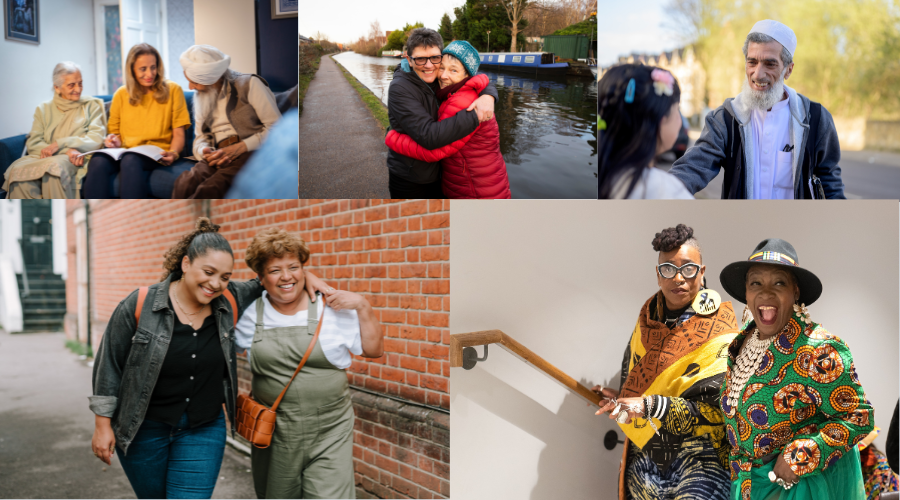
Social connection
Social connection supports health at every age. Find practical ways to strengthen relationships, stay involved in your community, and reduce isolation.
Everyone needs social contact, whether with family members, neighbours, coworkers, friends, or casual acquaintances.
Research shows that social connection helps us live longer, manage blood sugar, improve cancer survival, and reduce depression. In fact, social ties can be better predictors of long and happy lives than social class, IQ, or even genetics.
As people age, they often find themselves spending more time alone. But we can take steps and get help to improve social connection, even when it feels difficult. Read on for ideas, information, and resources.
Download this page as a PDF to save, print, or share.
Download printable PDFDeveloped with:
Dr. Patrick McGowan
Associate Director of the Institute on Aging and Lifelong Health, Professor in the School of Public Health and Social Policy at the University of Victoria, and Director of Self-Management BC.
Reviewed by:
Patrick McGowan, PhD, Professor, researcher
Eli Puterman, PhD, Professor, researcher
Grace Park, PhD, Professor, researcher
Last reviewed: May 2026
Disclaimer
This information is for general education purposes only and does not replace advice from a healthcare professional.
Written by:
Laura Busheikin
What you need to know
Loneliness and social isolation in older adults can contribute to
Malnutrition
Depression and anxiety
Reduced physical and mental abilities
A higher likelihood of unhealthy habits, such as drinking, smoking, and spending too much time sitting
Early death
Socially isolated older adults
Fall more often
Are four or five times more likely to be hospitalized
Are 50% more likely to get dementia
Adults who are socially isolated have longer hospital stays and end up back in the hospital more often than those with meaningful and supportive social connections.
Loneliness is connected to higher blood pressure, heart disease, inflammation, and obesity.
Steps you can take today
Find your community
People gather based on shared hobbies, beliefs, and goals. These communities usually welcome new members enthusiastically. They provide companionship, reasons to get out, and a sense of purpose.
Join a group
Join a cause or activity based on what you believe in. This might be a faith-based group, an environmental organization, a neighbourhood group, or a workout class for older adults.
Give back
Volunteering is a great way to make a difference, meet people, and become part of a caring community. Older adults are valued volunteers and there are many opportunities available.
Volunteering can be informal or formal
Volunteering can happen informally, like checking in on a neighbour who might need help or cooking a meal for someone, or formally through an organization.
What can a friend, family member, or caregiver do?
What the research says: Who is most at risk?
Learn more: Why is social connection a challenge for older adults?
As we age, many things can make us less socially active:
Physical limits—moving around becomes more difficult
Hearing and vision loss
Chronic health conditions—often more than one
The loss of family and friends
Separation from long-term friends and family if we move into a care home or retirement community
Resources
Province of BC website with links to places and programs for older adults, including libraries, volunteer opportunities, sports associations, cultural centres, and more
Pathways BC Community Services Directory
An online directory where you can search for services, education, and support
Formerly the BC Seniors Games. Gives people aged 55+ the chance to compete in events ranging from dragon-boating and ice hockey to cribbage and one-act plays
Read more
Canadian Frailty Network: Interact
Explores the connection between loneliness and frailty and provides recommendations
Resources for immigrants and newcomers
Immigrant Services Society of British Columbia
Resources for First Nations, Inuit, and Métis Peoples
Find a friendship centre near you
BC Elders Communication Society
An organization dedicated to ensuring that First Nations Elders all know that they are valued, that their legacy will be preserved, and that their feelings and culture matter
Keeping Our Nlakapamux Elders at Home
An initiative to keep Elders engaged in their communities
Resources for 2SLGBTQ+
A BC organization dedicated to improving queer, trans, and Two-Spirit lives through services, connection, and leadership. The link takes you to their page for older adults
Need more help?
🟦 HealthLink BC
📞 Call 811 (24/7)
Health information and advice from registered nurses, dietitians, pharmacists, exercise professionals, and health service navigators.
🟩 BC 211
📞 Call 811 (24/7)
Community programs, financial assistance, housing, transportation, caregiving, resources, and more.
Available in over 240 languages