
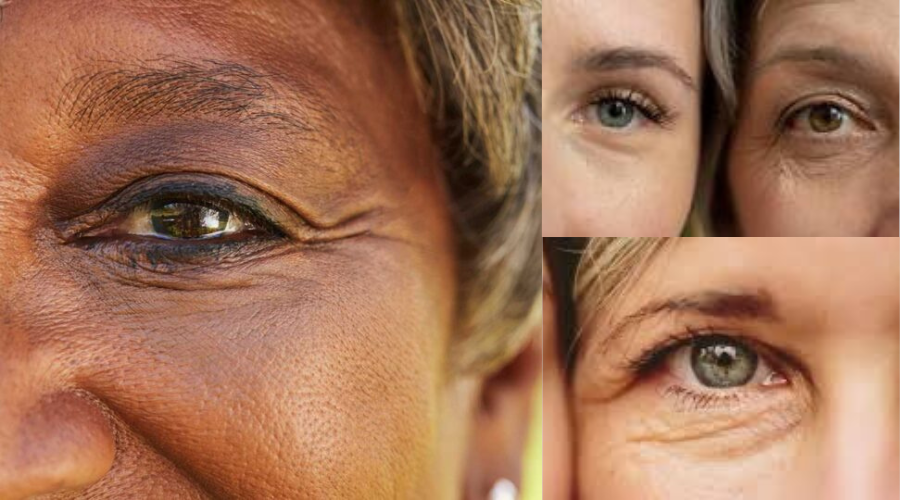
Your Eyes as you Age
Understand how vision changes with age and what you can do to keep your eyes healthy.
Download this page as a PDF to save, print, or share.
Download printable PDFDeveloped with:
Dr. Walter Wittich
Associate professor at the School of Optometry, Université de Montréal. Dr. Wittich holds a Masters in Psychology and a PhD in Visual Neuroscience. He is recognized as a leading researcher, teacher, and defender of human rights for people with disabilities.
Reviewed by:
Dr. Walter Wittich, PhD (Visual Neuroscience)
Last reviewed: January 2026
Disclaimer
This information is for general education purposes only and does not replace advice from a healthcare professional.
Written by:
Laura Busheikin
What you need to know
Whether big or small, eyesight challenges shouldn’t be ignored. Usually, they can be helped with glasses, contact lenses, eye drops, better lighting at home, or simple technology. Sometimes, changes in vision are signs of medical conditions that need attention.
Our health care system offers a range of vision professionals to help keep your eyes healthy and respond to changes in eyesight.
You can protect your eyesight. You have the power to protect your eyesight with a healthy lifestyle.
Vision health affects more than daily comfort. When vision or hearing problems go untreated, the risk of dementia can increase.
Options are continually improving. Technology and treatment for vision loss are continually improving. You might be surprised at all the options available.
There is nothing embarrassing about getting help. Many people avoid seeking care for their eyesight and using vision aids because they feel embarrassed. But there’s nothing shameful about taking care of our health, and our vision is part of our health.
Support can still make a difference. Vision problems can’t always be fixed, but you can find support to keep living the life you want to live.
Know your terms
These terms are often used in eye care. Here’s what they mean in plain language. Some terms have legal definitions and some more generally describe someone’s vision experience.
Low vision cannot be improved enough with conventional glasses, contact lenses, medication, or surgery, and is severe enough that daily tasks need to be modified.
Blindness is a visual disability that is severe enough to interfere with daily activities such as reading, cooking, or driving. This could mean total darkness, but also many different levels and types of visual disability.
Legal Blindness is a level of blindness that has been defined by law to limit some activities, such as driving, for liability or legal reasons, such as car crashes.
Deaf Blindness involves difficulty with both hearing and vision that impacts daily activities.
An Optometrist is your primary care provider for eye and vision health. The person you see for regular check-ups and who you contact when you have concerns. Has a Doctor of Optometry degree.
An Ophthalmologist is a surgeon and medical specialist in eye diseases. You will usually need a referral from your optometrist to see an ophthalmologist
An Optician provides glasses and contact lenses. Works with a prescription from an optometrist or ophthalmologist
Steps you can take today
Eat and sleep well
These two activities support all aspects of our health, including how our eyes function. Eat a varied diet with lots of whole foods and not many processed foods. If you have trouble sleeping, learn about ways to improve this.
Get regular exercise
Exercise brings more oxygen to your whole body, including your eyes—and they really need it. The retina (an important part of your eye) uses more oxygen than any other part of your body per square millimetre of tissue!
You don’t need to be a marathon runner. Anything that gets you moving and raises your heart rate will help. Visit our Mobility page for more information.
Wear sunglasses with 100% UV protection
Sunglasses will lower your risk of cataracts and other serious eye conditions. They also protect you from eye sunburn, which can be very painful. Even if you feel sunlight isn’t bothering you, it can cause permanent damage over time.
Don’t forget to wear your sunglasses in the car—the sun’s ultraviolet (UV) radiation gets through glass.
You don’t need expensive sunglasses—look at the UV rating label, not the price tag!
Make an appointment with an optometrist for an annual check-up
Adults 65 and older should see an optometrist once a year. This is important even if you are not experiencing any problems with vision. The optometrist can spot early signs of trouble so you can get treatment before things get worse.
Your provincial health insurance will help cover the cost of an annual optometrist check-up if you are 65 or older.
Find the right professional help
If your vision is stopping you from doing the things you need or love to do, don’t give up hope! You can start with a visit to the optometrist, but you don’t need to stop there.
A vision rehabilitation professional is a trained paramedical expert who helps people function with vision loss. Ask your optometrist for a referral or contact Vision Loss Rehabilitation Canada to find a vision rehabilitation professional near you.
Resist stigma
Don’t let embarrassment stop you from using vision aids or asking for help with lighting, font size, or other support. The more we learn and talk about vision loss and solutions, the easier it becomes for everyone to seek help.
Vision Challenges
| Condition or change | What is it? | What can I do? | Treatment? |
|---|---|---|---|
| Dark adaptation | As your eyes age, you can find it harder to move between bright and dark places. This is normal. | Remember to slow down a bit in these situations to let the eye and brain adapt. | — |
| Glare | Sensitivity to glare increases as we get older. | Wear a hat and sunglasses when outside. Inside, make sure lighting is bright and even and not directed directly at your eyes. Consider limiting driving at night. | Talk to your optometrist about solutions. |
| Dry eye | Dry eye happens when your eyes don’t produce enough moisture. Your eyes might be red and feel scratchy, itchy, stinging, or as if there is sand or grit in them. Sometimes, your eyes actually produce too many tears. | See an optometrist who can figure out what is causing the dry eye and recommend treatment. | Dry eye can usually be helped with eye drops or ointments. Don’t buy a product without getting a recommendation—some eye drops could make things worse. |
| Cataracts | A cataract happens when the lens inside your eye becomes cloudy. You may notice the world looks blurry, or you need more light. Cataracts are the most common form of vision loss for older adults in Canada. They are usually easy to treat. | See your optometrist once a year or whenever problems arise. They can look into your eye to see if you have cataracts. | Your optometrist will refer you to an ophthalmologist for surgery. Surgery takes a couple of hours, and you can go home the same day. |
| Glaucoma | Glaucoma is a group of diseases that affect the pressure in the eye. It can cause permanent vision loss. It is sometimes called the silent theft of sight because there are no symptoms in the early stages. | See your optometrist once a year. They can spot glaucoma in the early stages using special equipment. | Glaucoma, if detected in time, can usually be treated with daily eye drops. Sometimes, surgery is needed. |
| Macular degeneration | Age-related macular degeneration in an eye disease that affects how you see things directly in front of you. It is the leading cause of blindness in adults over the age of 50. | See your optometrist once a year. They can spot macular degeneration in the early stages using a special microscope. | Macular degeneration can be treated with dietary supplements and eye injections. This can stop the disease from getting worse but won’t restore lost sight. Also, you can use vision aids (magnifiers) to help you continue with your daily activities. |
| Diabetic retinopathy | Diabetes can lead to damaged blood vessels in the part of the eye called the retina. This can cause severe vision impairment. Diabetic retinopathy is the fifth leading cause of avoidable blindness in Canada. It usually does not create any symptoms in its early stages. | If you have diabetes type 1, get an eye exam within five years of diagnosis, and then every year. If you have diabetes 2, get an eye exam when you are first diagnosed and then every year. | Treatment includes blood sugar management, injections, laser therapy, and in some cases, surgery. |
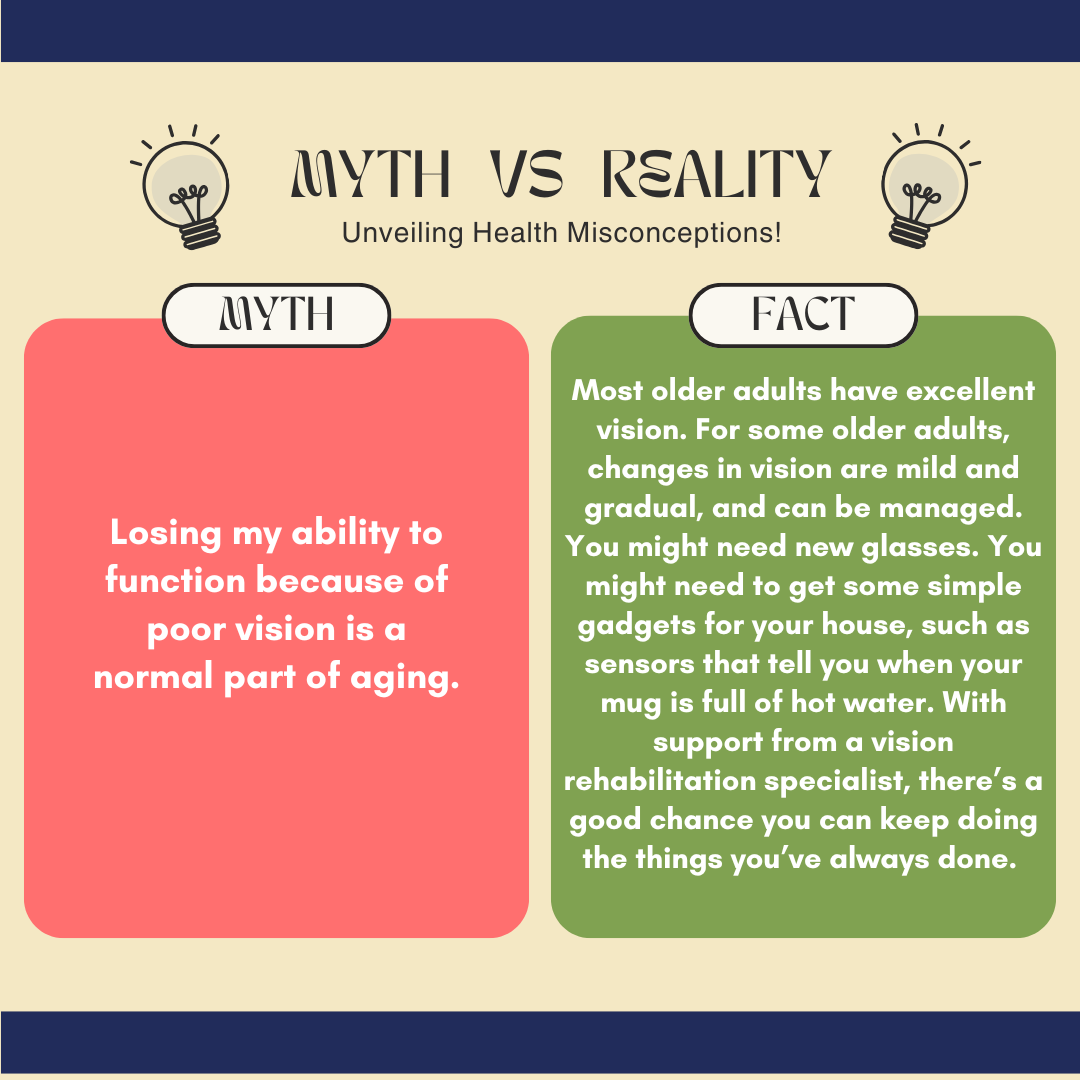
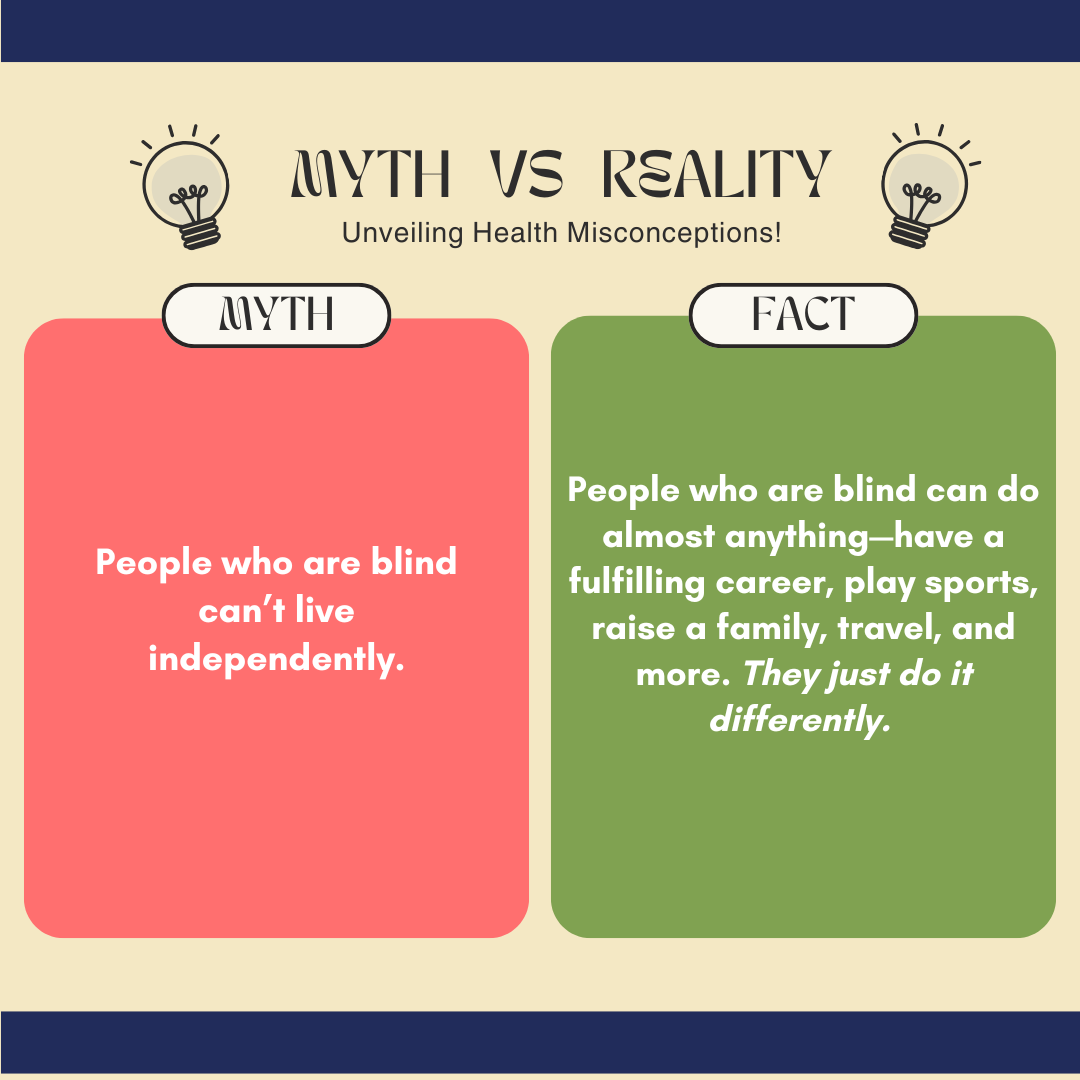
Myth vs. Fact
What the numbers say
By age 75, about half of Canadians have mild vision or hearing loss. Most people manage this well with support.
By the time you turn 70, you have a 50 percent chance of developing cataracts.
Vision loss can increase other health risks
Compared with older adults without vision loss, older adults with vision loss face:
Bar length shows the relative difference between the 2× and 4× risks.
Older adults with vision loss move to nursing homes three years earlier than those with no vision loss, on average.
of cataract surgery is successful.
Signs of an eye emergency
Some eye symptoms need urgent care. See an eye care professional right away if you:
- Suddenly can’t see, or see very poorly
- See new specks that seem to float across your vision (known as floaters) or flashes of light
- Experience double vision
- Feel sudden intense pain in your eye
- Have a swollen or red eye or eyelid
Learn more: finding solutions
If your vision problems make it hard for you to do everyday activities, you have options. Vision rehabilitation helps people learn new ways to do daily activities and stay independent.
What does a vision rehabilitation professional do?
A vision rehabilitation professional will get to know your eyesight abilities and offer solutions designed for your needs and daily life. Everyone is different. Some people might need help with cooking or pouring a cup of coffee. Others want to go to university, read to their grandchildren, or take the bus to the community centre.
Some solutions involve new tools that take time to learn. Others are simple. For example, you could use contrasting colours for dishes or put brightly coloured tape along the edges of stairs.
Examples: a vision rehabilitation professional can help you
Be safe at home
- Install better lighting
- Set up your kitchen so you can prepare food safely
- Learn to use a magnifier (a device that attaches to your regular glasses or your head, or sits on your table, to help you see better for specific tasks)
Use technology
- Learn to use a screen reader (software that reads aloud what is on your computer screen)
- Adjust the settings on your computer and phone so you can read and see graphics
- Use tools that talk to you, such as wristwatches, timers, scales, thermometers, glucose monitors, and more
- Learn to use a white cane
Find support
- Apply for funding from government and non-profit organizations
- Find healthcare and community programs
Who is vision rehabilitation aimed at?
Vision rehabilitation is for people who have vision problems that interfere with their daily life, and which can’t be helped with glasses, surgery, or medication.
How to find a vision rehabilitation professional
- Ask your optometrist for a referral to a vision rehabilitation professional, or
- Contact Vision Loss Rehabilitation Canada . This national not-for-profit organization can connect you to a vision rehabilitation professional in your area. They also travel to remote regions to provide services.
Learn more: what research tells us
Vision loss isn’t only a practical problem. It also affects social, emotional, and brain health. According to a long-term study, vision loss:
Leads to lower confidence
Increases the risk of depression
Is linked to loneliness and lower participation in social networks
Vision and brain health
As well, some research shows that people with uncorrected vision loss are more likely to develop dementia than people without vision loss.
People struggling with vision can find it harder to do the things that keep our brains healthy, such as being physically and socially active or eating healthy food.
Resources: information and specialists
Find care
Find an optometrist with the Canadian Association of Optometrists database
Find a vision rehabilitation professional at Vision Loss Rehabilitation Canada
Test your own vision
Click here to download the WHOeyes app, developed by the World Health Organization, for a home vision test. This does not replace the need for regular eye checks by an eye care professional, even if your vision is good.
Find reliable information about vision health
The Canadian National Institute for the Blind
HealthLink BC: Eye Problems, Non-Injury
HealthLink BC: Eye Problems, with Vision Changes
HealthLink BC: Vision Problems: Living with Poor Eyesight
Connect with other people experiencing vision loss
Join the Facebook group Low Vision
Contact Vision Loss Rehabilitation Canada and ask about support groups
Need more help?
🟦 HealthLink BC
📞 Call 811 (24/7)
Health information and advice from registered nurses, dietitians, pharmacists, exercise professionals, and health service navigators.
🟩 BC 211
📞 Call 811 (24/7)
Community programs, financial assistance, housing, transportation, caregiving, resources, and more.
Available in over 240 languages
Sources
Alzheimer’s Society: Vision Loss and the Risk of Dementia (2025)
Canadian Association of Optometrists website
Canadian Council for the Blind: The Cost of Vision Loss in Canada (2021)
Canadian National Institute for the Blind website
Fighting Blindness Canada: Cataracts (2021)
Health Canada: Sun Safety (2017)
Mayo Clinic: Diabetic Retinopathy (2025)
Prevent Blindness: Facts and Myths About Cataract (2021)
The University of British Columbia: Protecting your Eyes from Harmful UV Rays (2023)