
Dementia
Learn about dementia, how to reduce your risk, recognize warning signs, and find support for yourself or someone you care for.
Download this page as a PDF to save, print, or share.
Download printable PDFDeveloped with:
Dr. Stuart MacDonald & Dr. Belinda Robinson
Dr. MacDonald is an associate professor at the University of Victoria Department of Psychology. Dr. Robinson is a geriatrician and the regional medical director for Older Adults at Fraser Health.
Reviewed by:
Stuart MacDonald, PhD, Professor, researcher
Belinda Robinson, PhD, Professor, researcher
Eli Puterman, PhD, Professor, researcher
Last reviewed: May 2026
Disclaimer
This information is for general education purposes only and does not replace advice from a healthcare professional.
Written by:
Laura Busheikin
What you need to know
Dementia is not a normal part of aging. It does not affect all older people. Many people live into their 90s without developing dementia. Read about the difference between normal aging and dementia here.
There are many things we can do to help prevent dementia. Studies suggest that up to 40% of dementia cases could be prevented by changes in lifestyle.
Know your terms
Different types of dementia need different types of treatment, so it is important to get the right diagnosis.
Dementia is a term used to describe a group of symptoms that affect thinking, memory, behaviour, and emotions. When people have dementia, the symptoms interfere with daily life.
Alzheimer’s disease is not another word for dementia. Alzheimer’s is one type of brain disease that causes dementia. About 65–70% of dementia cases are caused by Alzheimer’s, but there are over 100 other types of dementia.
Steps you can take today
By making healthy choices, you can help delay the beginning of the disease and slow down its progress.
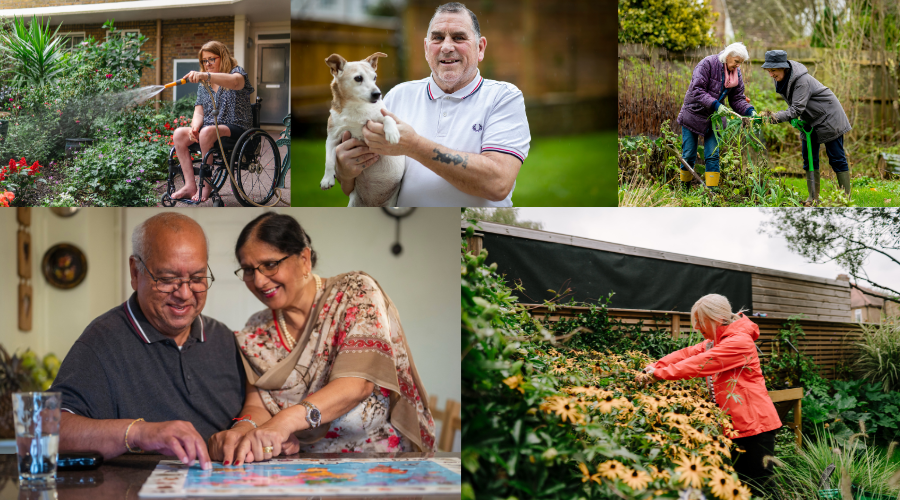
Stay active
Find something you like to do that keeps you moving. Physical activity is even more effective if you combine it with social connection or if you are learning something new. Some studies suggest that 21% of Alzheimer’s cases are linked to lack of physical activity. Get tips on our Staying active page .
Get a good sleep
Sleep helps your brain clean out toxins.
Stay socially connected
Visit neighbours, attend community events, join groups, and see friends and family.
Take care of your hearing
Get your hearing tested and wear hearing aids if they are recommended.
Make healthy lifestyle choices
Eat healthy foods, stay at a healthy weight, manage stress, drink enough healthy fluids, see your health care provider regularly, and don’t smoke.
Get treatment for health conditions
If you have depression, diabetes, high cholesterol, or high blood pressure, see your health care provider to treat and manage these conditions.
Cut back on alcohol or quit completely
Heavy or long-term alcohol use can increase the risk of dementia and make symptoms worse.
Protect your head
Head injuries can increase the risk of dementia. Wear a helmet for activities where a head injury could happen.
Challenge your thinking
Do things that make your brain work. Play games, learn a language or a new computer app, or take a dance class—find something you enjoy and make time for it.
Find meaning in life
Find a purpose to get out of bed each day.
Explore these two fact sheets from the Alzheimer Society of Canada:
Dementia symptoms
Watch Getting to Know Dementia: What is Dementia? from the Alzheimer Society of British Columbia.
Myth vs. Fact
“One of my parents had dementia so I’ll get it too.”
Dementia is not usually inherited. One rare form, early-onset Alzheimer’s disease, has a stronger genetic link. With other types of dementia, genetics play a smaller role, with lifestyle having more influence.
Learn more: Dementia treatment
Dementia can’t be cured, but treatment can help manage symptoms and improve quality of life.
Medications
Medications can help with symptoms.
Lifestyle changes
- Exercise
- Having an active social life
- Keeping your brain active
- Reorganizing the home to be safer and easier to live in. Find tips on our Your home as you age page .
Home and community care
Getting support from home and community care programs can improve the health and quality of life for both the person with dementia and their caregivers.
The Magic of Music
First steps if you are concerned about dementia
Talk to your doctor or nurse practitioner about your concerns.
You can also call First Link, a free and confidential phone service from the Alzheimer Society of British Columbia. They can answer your questions and help you decide on next steps. See Resources below for phone numbers to speak to someone in English, Punjabi, Hindi, Urdu, Cantonese, or Mandarin.
Warning signs: When to talk to a health care provider
It can be hard to tell the difference between normal forgetfulness and something more serious. Watch for:
Changes in behaviour
Symptoms that don’t go away or get worse
Behaviour that doesn’t make sense
A decrease in social activity—no longer seeing friends and family; not going out
Talk to a doctor or nurse practitioner early, even if you are unsure there is a problem. Early treatment can slow down the progress of dementia and give people a happier, healthier life for longer.
Some symptoms might be caused by something else, such as medication side effects, depression, diabetes, or nutritional problems. These can be dangerous and need attention.
Call a doctor right away if a person suddenly becomes confused or upset or doesn’t seem to know who or where they are. These are often signs of delirium, which is not the same as dementia. In delirium, the symptoms happen suddenly. Delirium can usually be treated successfully, and early intervention helps. Learn more on our Delirium page.
Support for caregivers
Dementia caregiving can be extremely demanding. People caring for someone with dementia spend an average of 26 hours per week providing care. Caregivers need to take care of themselves as well.
Support is available online and in most communities. This could be programs and services or simply someone to talk to. See our Support for caregivers page.
You can also contact the Family Caregivers of British Columbia at 1-877-520-3267.
What the numbers say: How common is dementia?
About 1% of people are affected by dementia.
About 8% of people are affected by dementia.
About 30% of people are affected by dementia.
Dementia is the seventh leading cause of death in the world.
Resources you can access
Free and confidential support for anyone affected by dementia | Mon–Fri, 9 a.m. to 8 p.m.
English: 1-800-936-6033
Cantonese and Mandarin: 1-833-674-5007
Punjabi, Hindi, and Urdu: 1-833-674-5003
Alzheimer Society of British Columbia
1-800-936-6033
Offers a wide variety of programs and support for people with dementia, their caregivers, and anyone who has a friend or family member with dementia, including:
In-person and online workshops and courses
Support groups and coffee and chat groups
Minds in Motion® fitness and social program (in person and online)
Support for Chinese and South Asian communities
Help finding dementia resources
Brochures and factsheets in Chinese, Japanese, French, Korean, Punjabi, Farsi
Overview of causes, symptoms, diagnosis, treatment, and support options
Resources for First Nations, Inuit, and Métis Peoples
A Gitxsan Way of Knowing About Dementia
Stories and a video showing an Indigenous perspective on dementia
Need more help?
🟦 HealthLink BC
📞 Call 811 (24/7)
Health information and advice from registered nurses, dietitians, pharmacists, exercise professionals, and health service navigators.
🟩 BC 211
📞 Call 811 (24/7)
Community programs, financial assistance, housing, transportation, caregiving, resources, and more.
Available in over 240 languages