
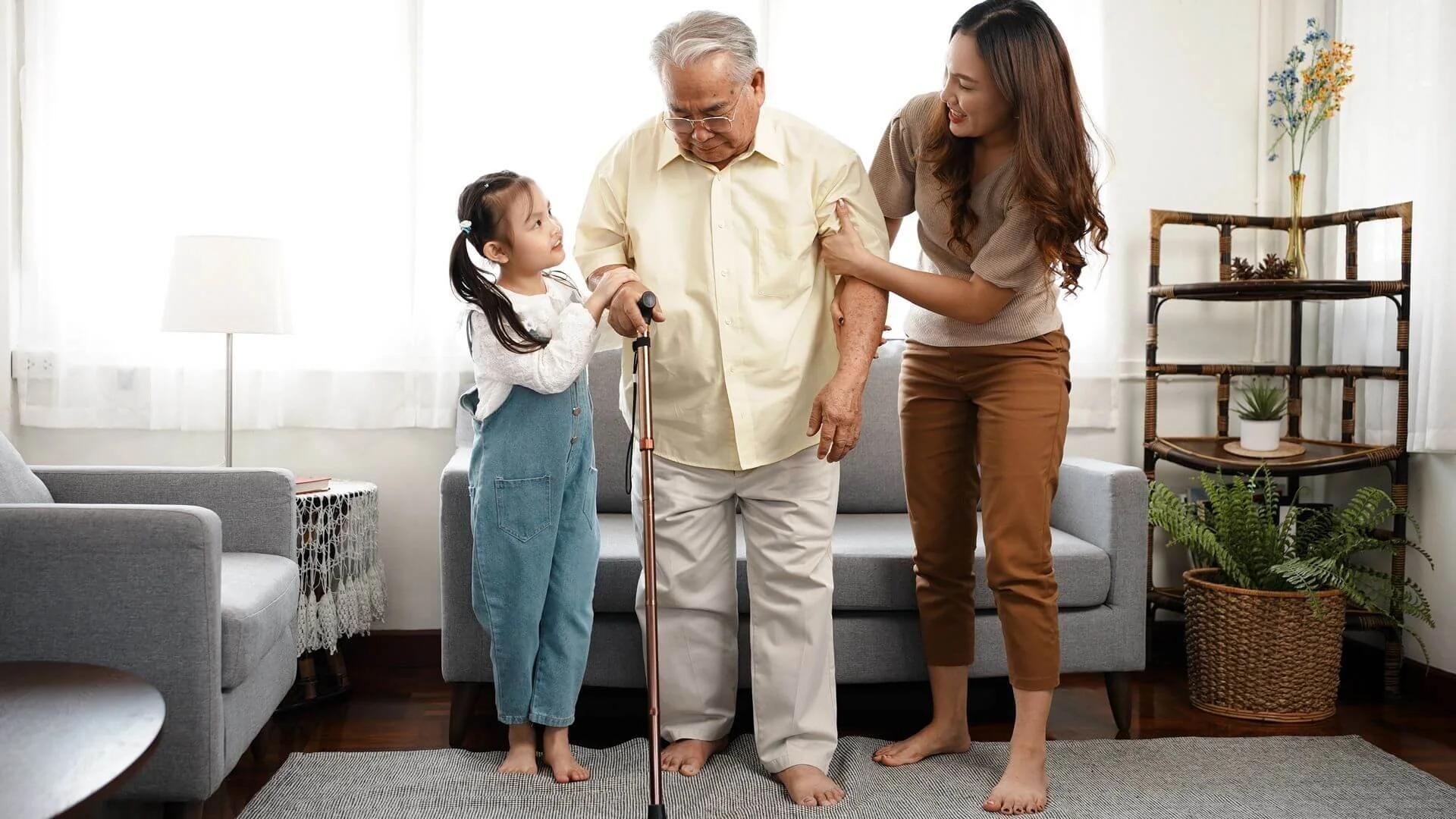
Your Home as you Age
Making your home safer, more comfortable, and easier to navigate as you age.
Developed with:
Therese Hirst
Certified Aging-in-Place Specialist
Reviewed by:
Dr. Eli Puterman
Last reviewed: January 2026
Disclaimer
This information is for general education purposes only and does not replace advice from a healthcare professional.
What you need to know
Age-proofing your home…
Prevents falls
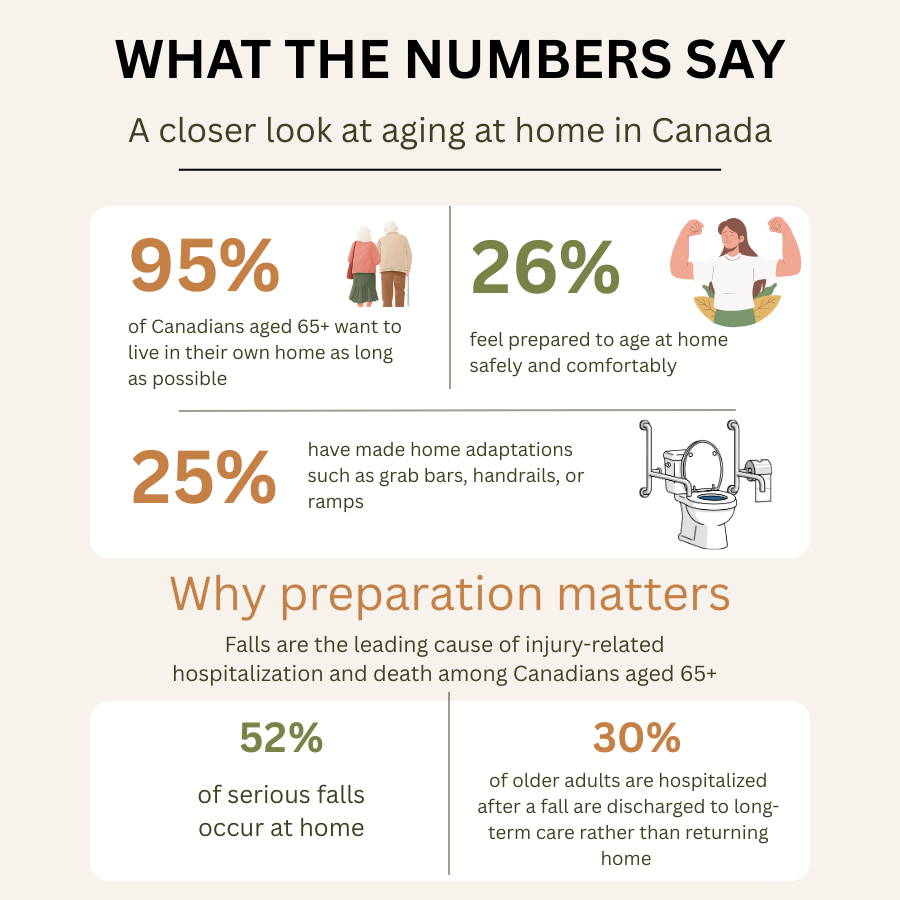
Falls are the number one reason older Canadians end up in hospital with an injury. They are often the turning point that means someone can no longer live at home. Half of falls among people aged 65 and older living in the community happen at home.
Helps you feel less tired
When your home is hard to navigate, everything takes longer. You struggle to get up the stairs, strain to reach a dish on a too-high shelf, and squint into dark corners. All this drains your energy. A well-adapted home gives you back that energy so you can use it for the life you want to live.
Lets you stay independent
When you adapt your home to fit your needs, you can keep living at home and taking care of yourself, which is what most people want. You can keep doing the things you need and want to do—cook a meal, take a shower, take an on-line course, or invite friends over.
Can be done with little cost and effort
You can start with simple steps that cost nothing. When you are ready, you can learn about tools, products, and trained professionals available.
Know your terms
Age-proofing means making changes to your home to increase safety, comfort, and accessibility for older adults.
Aging in place (or aging at home) means living safely and independently in your home or community for as long as you wish. It involves looking at your home, healthcare, transportation, support services, community, lifestyle, and social contacts with this goal in mind.
Future-proofing means making changes to your home so that it will remain comfortable, safe, and functional in the future. It helps the home adapt to different life stages, from raising children, dealing with health challenges, and accommodating an aging relative.
Steps you can take today
Get rid of your throw rugs
Throw rugs are a tripping hazard. As we age, we don’t pick our feet up as high as we used to.
Do you love your throw rugs? You can find companies that make ultra-thin throw rugs in a range of styles. Also, you can use double-sided tape to attach the edges to the floor. This minimizes the risk.
Improve lighting
A well-lit home reduces falls and bumps, makes dark corners easier to see, reduces glare, and makes everyday tasks easier. And as a bonus, lighting can add style and make your home look more inviting. Today’s lighting technology offers many fun and helpful options. Here are a few tips:
Layer your lighting
Ambient (overhead) light brightens the whole room.
Task lighting illuminates specific areas—beside your bed, over sinks, under cabinets, inside closets, and in places you read and do paperwork.
Floor-level lighting is especially important. You know that feeling when you’re not sure if there’s one more step or you’re on flat ground? That’s a high-risk moment, and lighting close to the floor will help.
Light up the night
Do you get up at night to use the bathroom? You can use strip lights that stick to the bottom of your bed or along a baseboard. These light up, a bit like an airport runway, to help you get to your destination safely. Consider using a red light—studies show red-spectrum light is less likely to disrupt sleep than bright white or blue light.
Embrace technology
Take advantage of motion detection, remote controls, and timers. No more fumbling in the dark to find a light switch!
Declutter for Safety and Calm
Tables covered in papers, rooms stuffed with furniture, kitchen counters full of dishes—this is clutter, and it causes problems for your health and safety. You can’t find items you need. You bump into things. You trip. Also, studies show that clutter raises stress hormones.
Find a friend, family member, or professional declutter to help you. If your clutter includes items that have personal meaning, take a moment to share their stories before you pass them on or pack them away.
Medium Effort, big reward
Replace doorknobs with levers
Levers are easier for arthritic or weaker hands. They are particularly helpful for bathroom doors because they work for slippery or wet hands. Also, people can push them with an elbow.
Store items you use often in easy-to-reach places
Sometimes just moving things around is enough. Also, the right technology can make a big difference. Pull-out drawers for kitchen cabinets help us see and reach all those items in the back. A spring-release cabinet raises up to counter height once you pull it out, then lowers back down and tucks away when you’re done. These can be particularly useful for heavy kitchen equipment, like a mixer.
Install grab bars and poles
To help you get out of bed easily, you can install a pole beside your bed. If you don’t want a permanent installation, you can buy ‘superpoles’ that stay in place using compression. They can be taken down and reinstalled easily.
Grab bars are especially important in the bathroom—by the toilet and in the bathtub and shower area. Modern designs let them double as towel racks, shampoo shelves, and toilet paper holders.
Focus on bathroom safety
As well as grab bars and better lighting, add
Anti-slip coating in your bathtub
A comfort-height toilet or a temporary toilet seat riser
Railings beside the toilet
A shower chair or stool
Install a second handrail for your stairs
Two handrails—one on each side—provide more stability than just one.
Use colour contrast to prevent falls
Use paint or high-contrast edge tape to emphasize the edges of stairs and the contrast between wall and floor, reducing falls.
Improve furniture
Buy heavier chairs, which are less likely to slip or tip when people lean on them for support. Also, anchor furniture so it does not slide. As well, consider chairs that help lift people to standing.
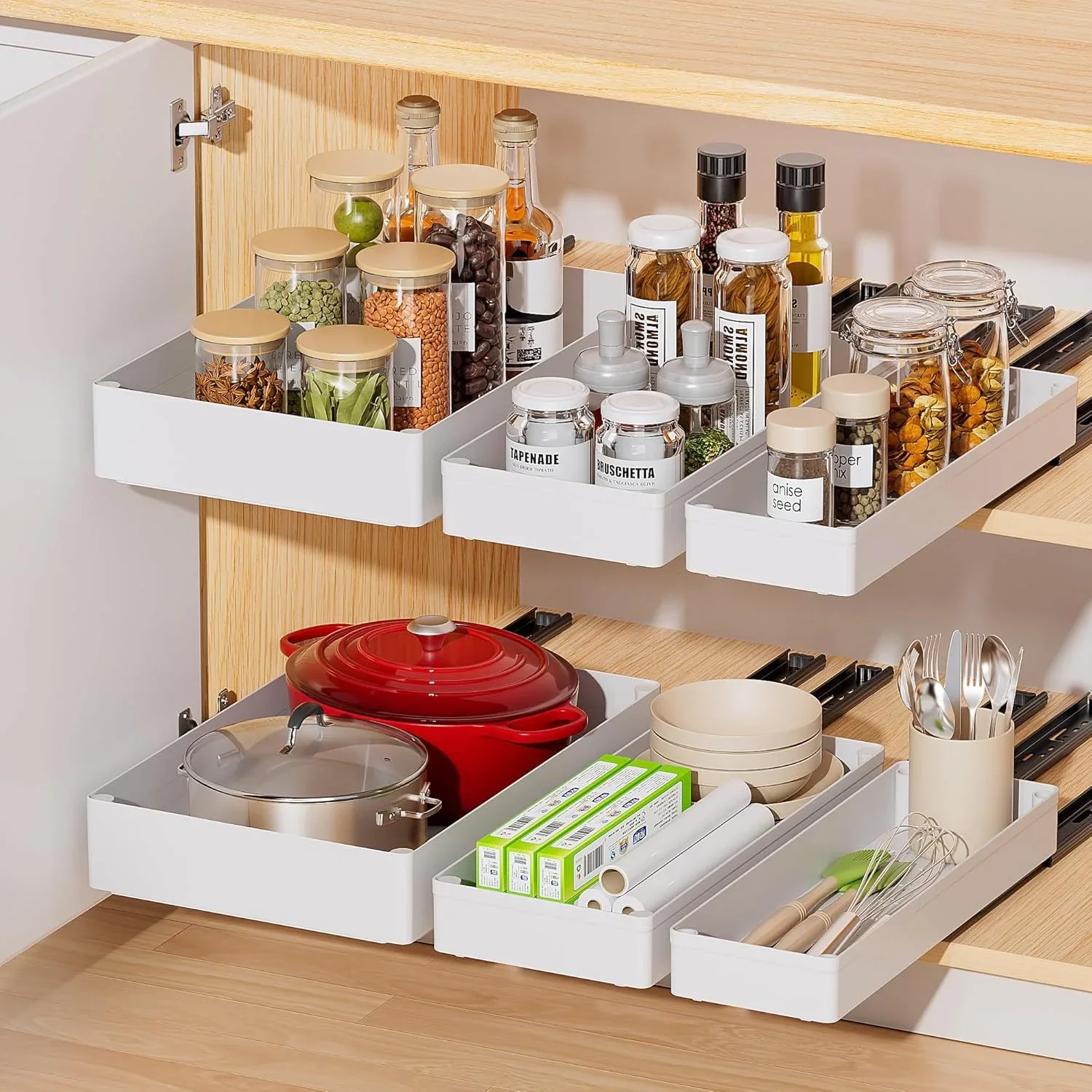
Example of pull-out drawers in a kitchen
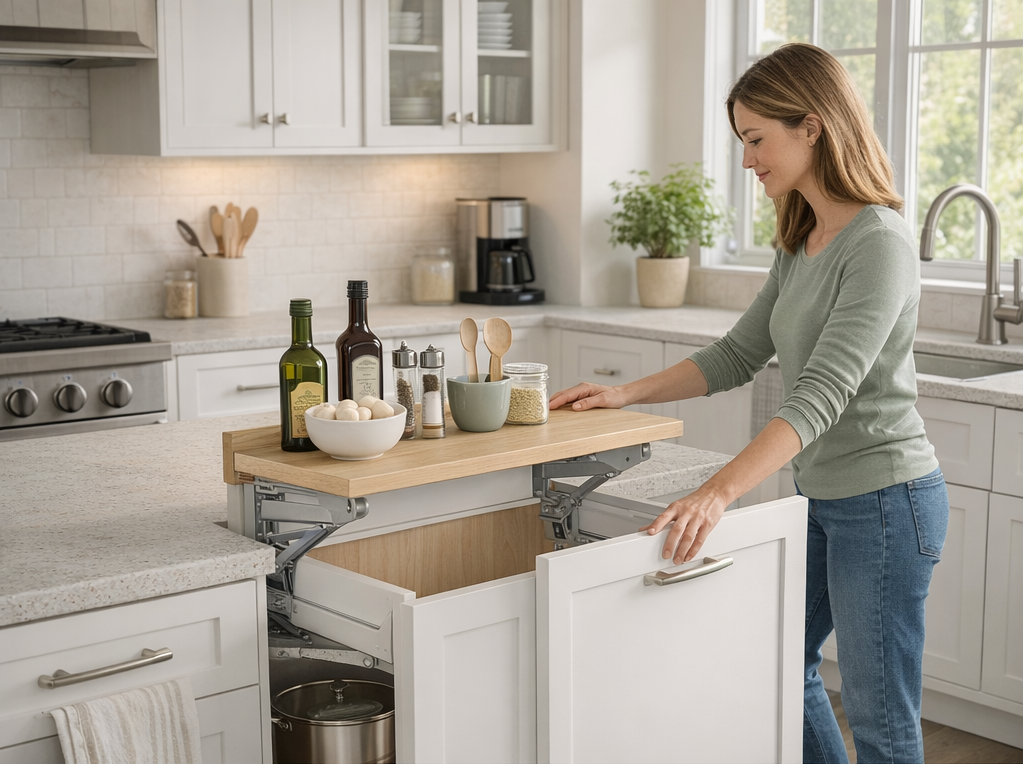
Example of a spring-release cabinet
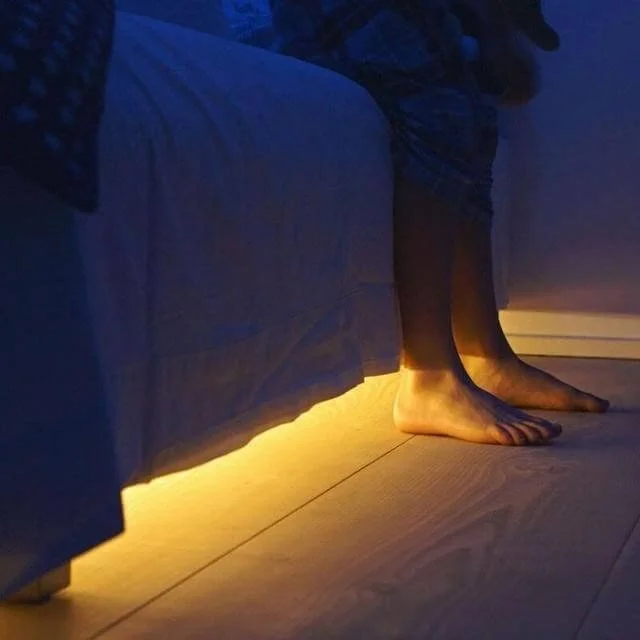
Strip lights along the bottom of a bed
Bigger adaptations that pay off
Take out your bathtub
Anyone who has problems with their hips or their balance is at risk as they climb in and out of a bathtub. A grab bar helps, but for many people, the bathtub is still unsafe. Replacing the tub with a shower can prevent falls.
Create more space
People have an easier time moving around in rooms that have wider doorways and larger rooms. This extra space is especially important for someone using a walker or wheelchair. Sometimes it makes sense to knock down walls and combine small rooms into one big room or convert a guest bedroom into an accessible bathroom.
Get a stair lift
Stair lifts can allow people to remain in multi-level homes as their mobility declines.
Get an elevator
Home elevators are becoming more common. Today’s models use air pressure technology, attach to the outside of your house, and often cost about the same as a mid-range car.
Work with a professional
An occupational therapist is a healthcare professional who can visit your home and make recommendations, ranging from simple changes like moving furniture around to detailed plans for renovations. Find an occupational therapist by asking your doctor, nurse practitioner, or home health case manager.
A Qualified Adaptiv Home Specialist is a member of the Canadian Home Builders’ Association (CHBA) who has successfully completed their Adaptiv Home Renovation Course. The course gives them renovation skills to accommodate someone living with a disability, a progressive condition, or those looking to age in place. Find an Adaptiv Home Specialist at the CHBA website.
A Certified Aging in Place Specialist (CAPS) is similar to an Adaptiv Home Specialist but has certification through the US National Association of Home Builders.
Myth versus fact: it’s easier than you think
Myth: Age-proofing my home will make it look like a hospital or care home
Reality: Most adaptations listed here don’t change the look of your home. If you need to install equipment, you can use products that blend in with your décor. For example, you’ll find stylishly designed grab bars that also serve as towel racks, toilet paper holders, or shampoo shelves.
Myth: Adapting my home will cost too much.
Reality: Many changes cost little or nothing—sometimes less than a take-out meal. Even small steps make a big difference. You can always plan ahead and save for the more expensive actions.
Myth: I need special skills and expert knowledge to adapt my home.
Reality: You can do many small improvements yourself or with a friend’s help. For larger or more structural changes, you can seek advice from a medical professional or someone certified in aging-in-place. This person would visit your home, chat with you, and help you with next steps. See Work with a Professional, above.
What the numbers say
Funding Programs
Government programs and financial aid
BC Rebate for Accessible Home Adaptations (BC RAHA)
Provides financial help (up to $20,000 in rebates) for home adaptations that support independent living for older adults and people with disabilities
For low- and moderate-income households
Could cover adaptations such as grab bars, ramps, walk-in showers, and widened doorways
Also offers some funding for a first assessment, even if that does not lead to action
Contact: BC Housing at 604-433-2218 or 1-800-257-7756 (toll-free)
Home Renovation Tax Credit for Seniors and People with Disabilities
Helps people aged 65 and over (or family members living with them) with the cost of certain permanent home renovations
Offers a personal income tax credit, meaning you would be reimbursed after you file your tax return
Allows you to claim up to $1,000 per tax year
Resources you can access
Room-by-room guides to making your home more accessible
No- and Low-Cost Modifications for Accessibility, from the Canada Mortgage and Housing Corporation
The Age at Home Canada Safety & Independence Checklist, from Age at Home Canada
Guides to Aging in Place
The Safe Living Guide: This booklet from the Public Health Agency of Canada provides information on many aspects of aging safely
Aging in Place Toolkit: This checklist and resource list, offered by the United Way, will help you learn more about topics connected to aging in place (home, transportation, finances, social connections, safety, community, and more)
Need more help?
🟦 HealthLink BC
📞 Call 811 (24/7)
Health information and advice from registered nurses, dietitians, pharmacists, exercise professionals, and health service navigators.
🟩 BC 211
📞 Call 811 (24/7)
Community programs, financial assistance, housing, transportation, caregiving, resources, and more.
Available in over 240 languages
Sources
BC Association of Community Response Networks: Aging in Place: What It Means for You (2023)
Government of Canada: Safe Living Guide: A Guide to Home Safety for Seniors (2021)
HealthLink BC: Preventing Falls (2022)
Public Health Agency of Canada: Seniors’ Falls in Canada: Second Report (2014)
Public Health Agency of Canada: Surveillance Report on Falls Among Older Adults in Canada (2022)